You apply for a home loan, the bank officer types your PAN into a system, and within minutes your chances have mostly been decided. What they are looking at is your credit report and the three-digit score built from it.
The score is not a mystery or a judgement on your character. It is a summary of how you have handled borrowed money. Once you know what goes into it, most of it is in your control.
In India, credit records are kept by credit information companies, usually called credit bureaus. They are licensed and regulated by the Reserve Bank of India. There are four: TransUnion CIBIL, Experian, Equifax and CRIF High Mark.
Banks, NBFCs and other regulated lenders send them regular updates on your loans and credit cards: how much you owe, your limits, and whether you paid on time. Each bureau turns that data into a report and a score. CIBIL is the best known, which is why people say CIBIL score for any credit score, but lenders may check any of the four.
Your scores can differ slightly between bureaus, because each uses its own model and a lender may not report to all of them in the same way. That is normal.
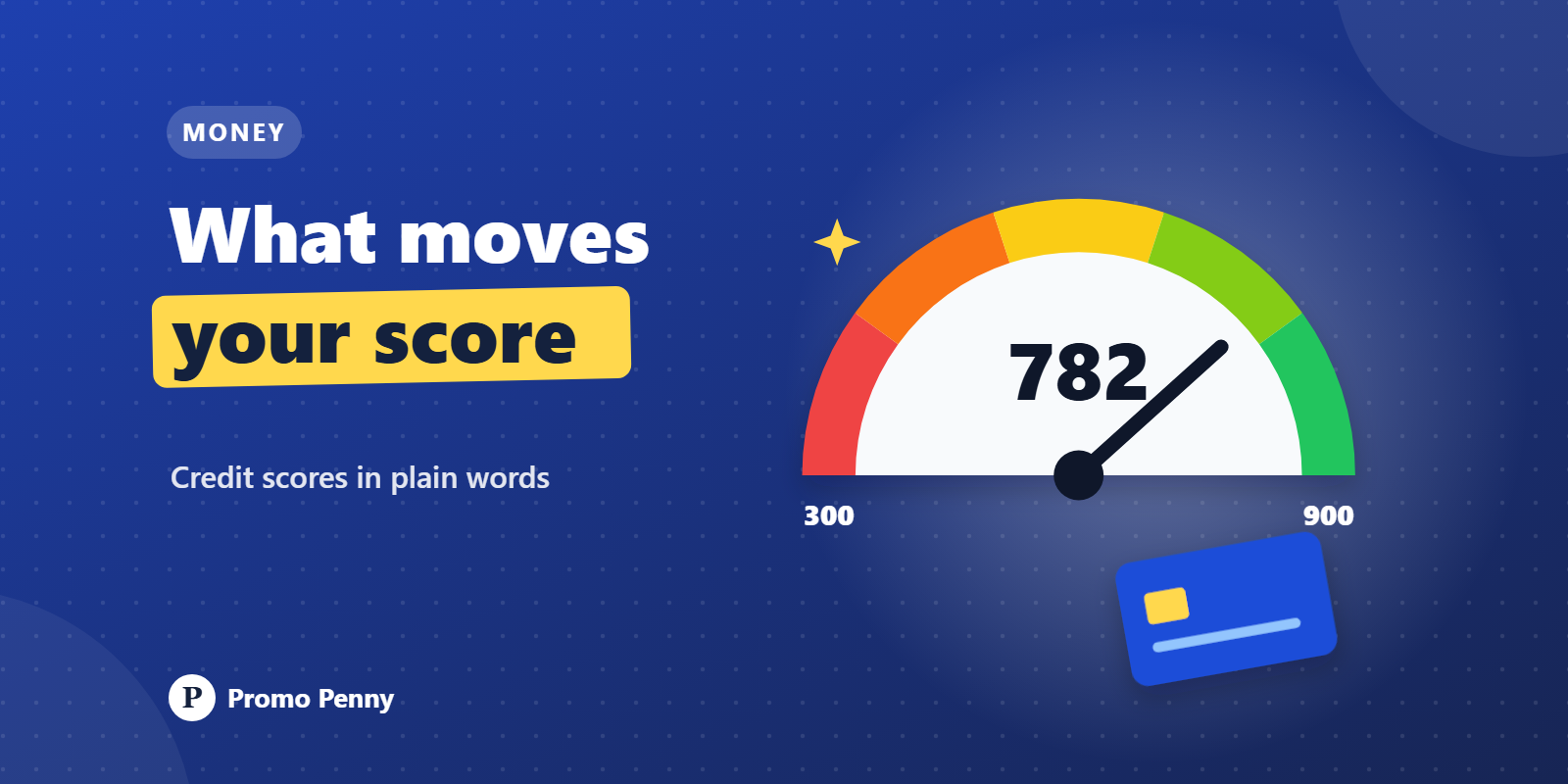
CIBIL scores run from 300 to 900, and the other bureaus use broadly similar ranges. Higher is better. Many lenders treat a score of around 750 and above as good, but there is no official pass mark. Each lender sets its own cut-offs and also looks at your income, existing loans and job.
If you have never had a loan or credit card, you may see no score at all, shown as something like NA or NH (no history). That is not a bad score. It just means there is not enough data yet. A small credit card used carefully, or a modest loan repaid on schedule, is how most people build a history.
Bureaus do not publish exact formulas, but the main ingredients are well understood:
Checking your own score is a soft enquiry and does not affect it. Check as often as you like.
Take a hypothetical salaried person, Priya, with two credit cards:
| Card | Limit | Balance on statement |
|---|---|---|
| Card A | ₹60,000 | ₹42,000 |
| Card B | ₹40,000 | ₹18,000 |
| Total | ₹1,00,000 | ₹60,000 |
Her overall utilisation is ₹60,000 / ₹1,00,000 = 60 percent. Card A on its own is at 70 percent.
A common rule of thumb is to keep utilisation below about 30 percent. It is a guideline, not an official limit. For Priya, that means statement balances of around ₹30,000 or less across both cards.
She has three practical options. She can spread spending so no single card runs near its limit. She can pay part of the bill before the statement date, since the balance on the statement is usually what gets reported. Or, if her income has grown, she can ask for a higher limit and not spend more. Any of these lowers the ratio without changing how much she actually spends in a month.
Utilisation is also one of the faster things to fix. A late payment stays on your report for years. A high balance stops mattering once it comes down and is reported.
Under RBI rules, each credit bureau must give you one free full credit report every calendar year on request. With four bureaus, that is four free reports a year if you spread them out. You can request yours on each bureau's official website using your PAN and other identity details. Many bureaus, banks and finance apps also show a free score more often.
Be careful where you enter your PAN and mobile number. Use the bureau's own website or your bank's official app, not a link that arrived by SMS.
When you open the report, check:
An unknown loan in your name can be a sign of identity misuse. Raise it with the bureau and the lender immediately.
Mistakes do happen. A bank fails to update a closed loan, a payment is posted late, or someone else's account is mixed into yours.
One thing no one can do is remove accurate negative information. Agencies that promise to wipe out genuine defaults for a fee are best avoided. The real fix for a true late payment is time and a clean record from here on.
This article is general information for learning, not financial advice. Rules on credit reporting change, so check the RBI and the credit bureaus for the latest position.




























© 2026 Promo Penny. All rights reserved
Designed & Developed by IngeniousPro Team.