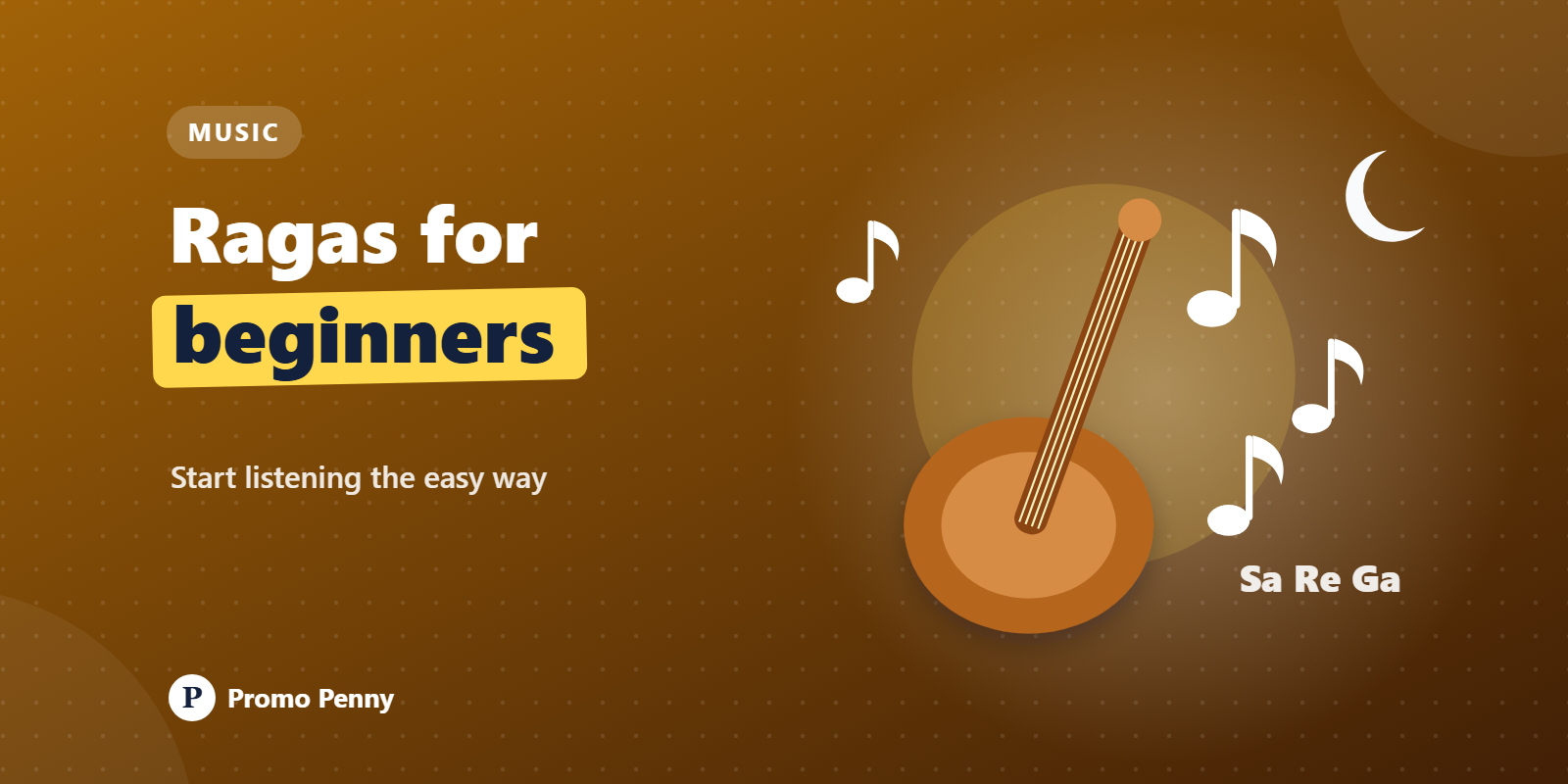
Ragas for Film Music Lovers: A Beginner's Guide to Listening

Ragas for Film Music Lovers: A Beginner's Guide to Listening

You already know more about ragas than you think. If a film song has ever sounded like early morning to you, or like a late-night ache, there's a good chance the composer was borrowing the grammar of a raga to take you there.

The problem is the concert hall. Someone plays slow phrases for twenty minutes with no drums, and you start wondering when the song begins. This is the cheat sheet nobody hands you at the door.

A raga is not just a scale

The easiest wrong answer is that a raga is a scale. A scale is a set of notes. A raga uses a set of notes, but it also comes with rules and habits about how to use them.

Think of it like a person's way of speaking. Two people can know the same words and sound nothing alike, because of the phrases they repeat and the words they stress. A raga has that kind of personality:

  • A set of notes, often with a different path going up (aroha in Hindustani, arohanam in Carnatic) and coming down (avaroha or avarohanam). Some notes may be skipped on the way up and used on the way down.
  • Characteristic phrases, little melodic signatures that tell an experienced listener which raga this is within seconds. In Hindustani music the identifying phrase is often called the pakad.
  • Important notes that the music leans on and rests on. Hindustani theory calls the most important one the vadi and its partner the samvadi.
  • Ornaments: how a note is approached, bent or shaken. In Carnatic music these gamakas are so central that a raga sung with straight notes can sound like a different raga.
  • A mood, and often a time. Hindustani tradition links many ragas to a time of day or a season. Carnatic practice is far less strict about time.

So two ragas can use the same notes and still feel completely different. That's what makes it an art, not a maths exercise.

Hindustani and Carnatic, in broad strokes

India has two big classical traditions. Hindustani music is mostly associated with the north, along with parts of central and western India, and is also performed in Pakistan and Bangladesh. Carnatic music belongs to the south: Tamil Nadu, Karnataka, Andhra Pradesh, Telangana and Kerala.

Both share the ideas of raga (melodic framework) and tala (rhythmic cycle). What a new listener notices first:

  • Improvisation and composition. Both traditions do both. But a Hindustani concert usually spends long stretches slowly building one raga, while a Carnatic concert is built around fixed compositions called kritis, many by the composers Tyagaraja, Muthuswami Dikshitar and Syama Sastri, with improvisation woven around them.
  • Length of pieces. A Hindustani evening may have only two or three main items. A Carnatic concert often has ten or more.
  • How ragas are organised. Hindustani music groups ragas into ten parent families called thaats. Carnatic music has a neat system of 72 parent scales called melakartas, from which many other ragas are derived.

Neither is harder or better. They are two dialects of one very old language.

How a Hindustani performance unfolds

Once you know which stage you're in, the slow parts stop feeling like waiting. An instrumental recital, say on sitar or sarod, usually goes like this:

  1. Alap. Slow, with no fixed beat and no tabla, only the tanpura drone. The musician introduces the raga note by note, like someone showing you around a house one room at a time.
  2. Jod. A steady pulse enters, still without tabla. Things start moving.
  3. Jhala. Fast and exciting, with rapid strokes on the drone strings. This is often the first moment a new listener sits up.
  4. Composition with tabla. A fixed composition (a gat) set to a tala. The tabla joins, the composition keeps returning as a home base, and the soloist and tabla player trade ideas that get faster towards the end.

A vocal khayal performance follows a similar logic. A short alap leads into a composition called a bandish, first in a slow tempo (vilambit), then often a second bandish in a fast tempo (drut). The tabla keeps the cycle going; the most common one, teentaal, has 16 beats.

A small tip: listen for the sam, the first beat of the cycle. Musicians love to land a long phrase exactly on it, and you'll see people nod or tap their thigh. Once you can feel the sam coming, you're no longer a beginner.

How a Carnatic concert is built

A Carnatic concert, often called a kutcheri, feels more like a well-planned thali. The exact order varies by artist, but a common pattern is:

  • A varnam to open, which warms up the voice and shows the raga's phrases at different speeds.
  • Several kritis in different ragas and talas, some brisk, some reflective.
  • A main piece: an unhurried raga alapana (like the Hindustani alap), then a kriti with improvisations such as neraval (new melodic variations on one line of text) and kalpanaswaram (improvised passages sung in note names: sa, ri, ga, ma).
  • A tani avartanam, a percussion solo, usually mridangam with ghatam or kanjira.
  • Lighter pieces towards the end, such as bhajans or a tillana, and a closing mangalam.

If the singer begins a long alapana and the violinist answers each phrase, you're at the heart of the evening.

Five ragas worth knowing by feel

The moods below are traditional associations, not laws. But they're a useful handle when you're starting out.

Yaman (Hindustani)

An evening raga, often one of the first that students learn. Its sharp (tivra) Ma gives it a gentle, glowing, slightly yearning quality.

Bhairav (Hindustani)

A raga of dawn. It uses flat (komal) Re and Dha, and has a grave, devotional seriousness. Think temple bells and cold early mornings.

Darbari Kanada (Hindustani)

A deep, slow raga for late night, traditionally linked to Tansen and the court of Akbar. Listen for the komal Ga, gently oscillated rather than sung straight. It feels heavy, dignified and often melancholic.

Mohanam (Carnatic) and Bhupali (Hindustani)

These two use the same five notes: Sa, Re, Ga, Pa and Dha, with no Ma or Ni. With no half-step clashes, the sound is open and sunny, and comparing the two is a nice way to hear how each tradition treats the same material.

Kalyani (Carnatic)

One of the grand ragas of Carnatic music, and a cousin of Yaman, since it also uses the sharp Ma. It feels bright, expansive and auspicious, and some of the best-loved kritis are set in it.

A simple way to start listening

Don't start with a three-hour live concert. Start the way you'd get to know a new cuisine: one dish, several cooks.

  1. Pick one raga for a week. Yaman or Mohanam/Bhupali are friendly choices.
  2. Listen to three or four versions by different artists, at least one vocal and one instrumental. You'll start hearing what stays the same (the raga) and what changes (the artist).
  3. Begin with shorter recordings of 10 to 20 minutes. Instrumental pieces help if unfamiliar lyrics put you off.
  4. Listen at the right hour. Bhairav with your morning tea and Darbari late at night isn't superstition. It just helps the music land.
  5. Try to hum the recurring phrase. If you can hum it back, you've found the raga's fingerprint.
  6. Then go live. Many cities have small free or low-cost concerts at sabhas, cultural centres and colleges. Chennai's December music season and Pune's Sawai Gandharva festival are well-known bigger options; check the organisers for dates.

And it's fine to walk in knowing nothing. Nobody will quiz you on thaats.

The one thing to remember

You don't need theory to enjoy a raga, any more than you need grammar to enjoy a conversation. Pick one raga, play it at the right hour, and give the slow opening five patient minutes.

That opening isn't the warm-up. It is the music.
mail

Don't miss anything. Get all the latest posts delivered straight to your inbox. It's free!

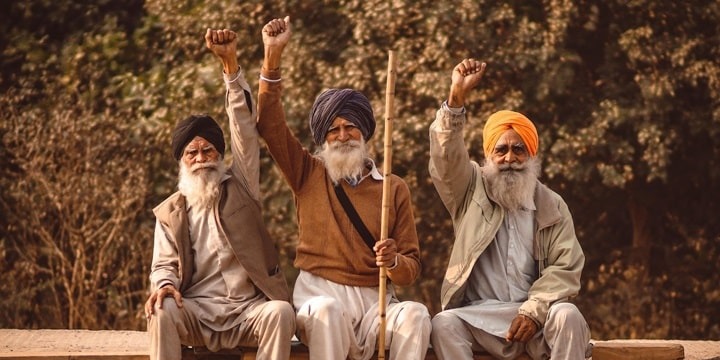
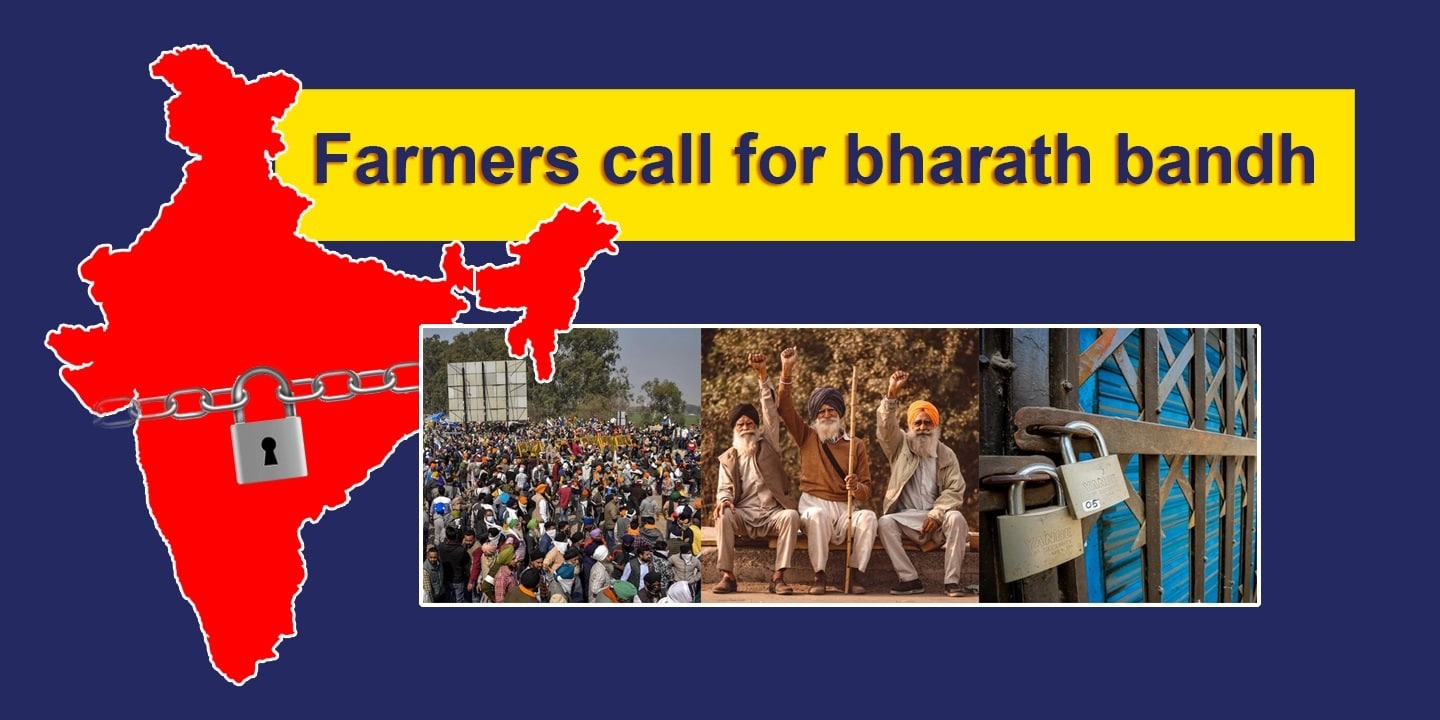
Bharat Bandh Today Called by Farmers

Bharat Bandh Today Called by Farmers

Look at the Bharat Bandh, the All India farmers fight, by which the farmers want to attract wide attention to their issues and concerns. Study the reasons which lead to this movement, define the main parts of process occurring during this period and influence which it has on every social sphere. Try to comprehend the implication of ‘Bharat Bandh’ which brings into focus the problems of pathetic farmers.
Breaking News: Morgan Stanley purchases a 0.8% stake in PayTM through the open market for around ₹244 crores

Breaking News: Morgan Stanley purchases a 0.8% stake in PayTM through the open market for around ₹244 crores

Morgan Stanley also made a strategic investment with PayTM in the midst of the financial industry amid regulatory challenges. The focus of this article is PayTM’s development, Morgan Stanley’s financial support, and possible outcomes of both movements. Find out how PayTM sidesteps regulatory barriers and what analysts say about the payment solutions provider.
5 Best AC Brands in India for 2024: Advanced Optimal Cooling at Low Electricity Consumption

5 Best AC Brands in India for 2024: Advanced Optimal Cooling at Low Electricity Consumption

Explore the realm of modern comfort with air conditioners, an essential part of Indian households. In this blog, we unravel the complexities of choosing the best AC brand in India for 2024. Our comprehensive research unveils the top-rated brands, focusing on advanced features, energy efficiency, and superior cooling performance.

Most Recent

States & Cities

Entertainment

Business & Finance

Science & Technology