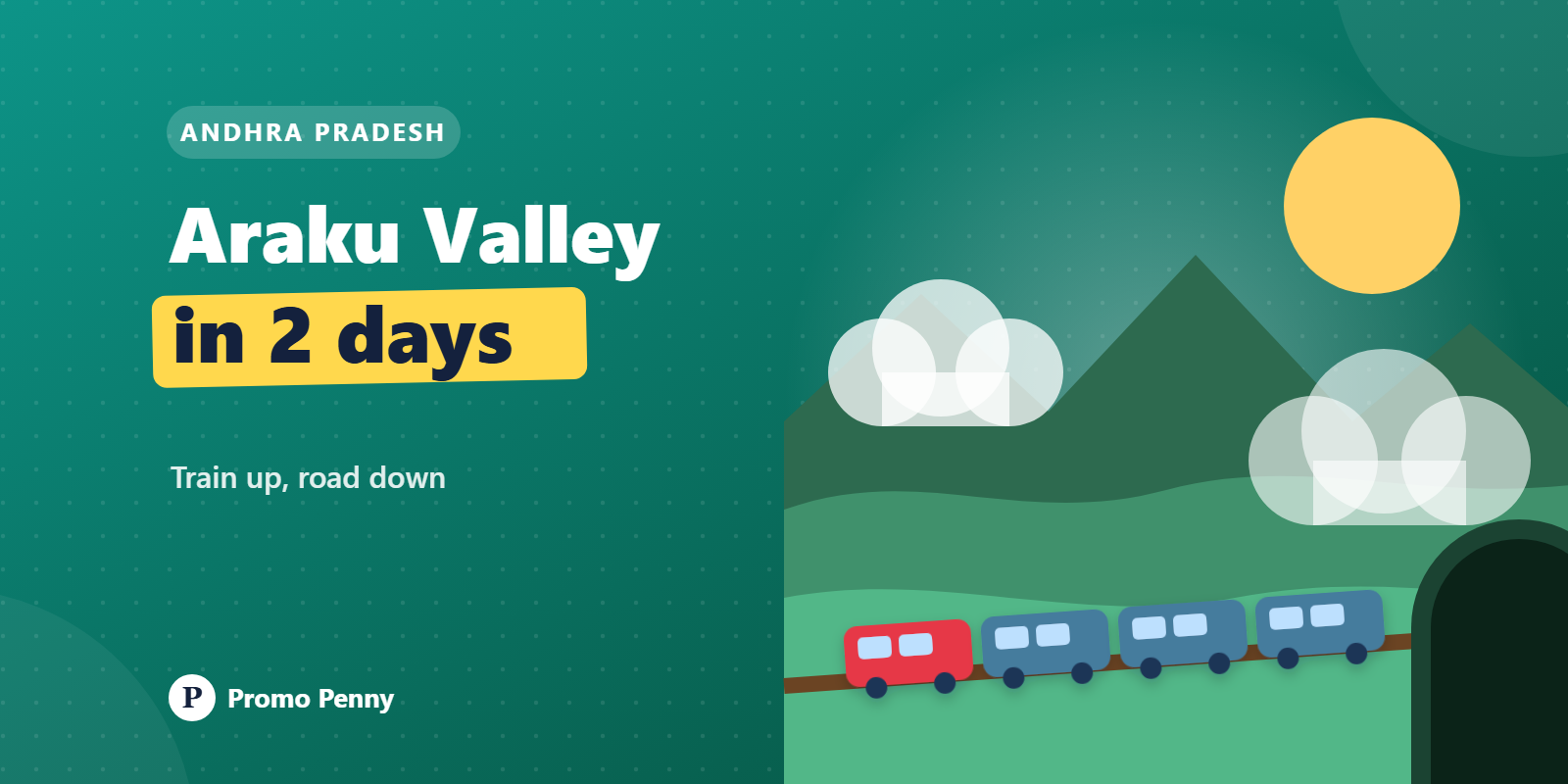
The best way to do Araku Valley is simple: go up by train, come down by road. The train gives you the tunnels and the valley views; the road lets you stop at the caves, viewpoints and coffee estates on your own schedule.
Araku sits in the Eastern Ghats in Alluri Sitharama Raju district, a little over 100 km from Visakhapatnam by road. That sounds short, but the hills slow everything down, so give it at least two days.
The railway line from Visakhapatnam towards Kirandul in Chhattisgarh was built mainly to carry iron ore from the Bailadila hills. For travellers, though, it's one of the prettiest rides in South India. After the coastal plains, the train climbs into the Ghats through a long series of tunnels and over bridges, with views across forested valleys. Borra Guhalu station, for the caves, comes before Araku.
A few practical notes:
The road climbs through the Ananthagiri ghat section, with plenty of hairpin bends and green views. You can take an APSRTC bus, hire a taxi or drive yourself. The big advantage is freedom: you can stop at Borra Caves, Galikonda viewpoint and the coffee estates along the way.
The Borra Caves (Borra Guhalu) are limestone caves with large chambers full of stalactites and stalagmites, shaped by water over a very long time. They're lit artificially, and the walk inside involves steps and damp, sometimes slippery floors. Since they lie between Visakhapatnam and Araku, most people visit on the road leg. Wear shoes with grip.
The Ananthagiri area is coffee country, with coffee bushes growing under tall shade trees, often with pepper vines climbing them. Much of the coffee in this region is grown by Adivasi farmers, and Araku coffee now has a reputation well beyond Andhra Pradesh. A short stop at an estate or a roadside stall is one of the nicest parts of the trip.
The tribal museum in Araku is the place to start understanding the area. It shows the homes, tools, clothing, crafts and festivals of the Adivasi communities of these hills. Give it an hour; it makes everything you see afterwards more meaningful.
Close to the tribal museum, the coffee museum tells the story of coffee from plant to cup, and you can taste and buy local coffee. It's touristy, but fun, especially with children.
An old garden with big trees, flower beds and tree-top huts. It's a pleasant, easy stop in Araku town, best in the softer late-afternoon light.
Galikonda viewpoint, on the ghat road, looks out over the hills from one of the higher points in the area. Chaparai, a set of small cascades over rocks near Araku, is a popular stop. Katiki waterfalls near Borra involves a jeep ride and a walk; check locally whether it's open and safe, especially after heavy rain. And on winter mornings, mist often lies in the valleys at dawn, which is worth setting an alarm for.
October to February is the most comfortable time. Days are pleasant, nights are cool to properly cold in December and January, and mornings are often misty. It's also peak season, so expect crowds on weekends and holidays.
The monsoon months, roughly July to September, turn the hills intensely green, fill the waterfalls and make the train ride beautiful. The trade-offs are slippery paths, poor visibility on the road and the occasional landslide.
March to May is warmer and quieter. Araku stays cooler than the coast, but the hills look drier and the mist is mostly gone.
If you have a third day, don't add more sights; add slack. A slow morning in the valley beats ticking off one more waterfall in failing light. Lambasingi, a hill village known for winter fog, is a possible add-on, but it's a separate detour and needs its own planning.
Araku is not a theme park. It's home to Adivasi communities, and much of the region is a Scheduled Area with special constitutional protections, including limits on outsiders acquiring land.
Before you leave, check the train on IRCTC and confirm the opening days of the caves and museums with Andhra Pradesh Tourism or a local tourism office, since these can change. Then go up by train, come down by road, and leave a little room in the plan for the valley to surprise you.

































© 2026 Promo Penny. All rights reserved
Designed & Developed by IngeniousPro Team.