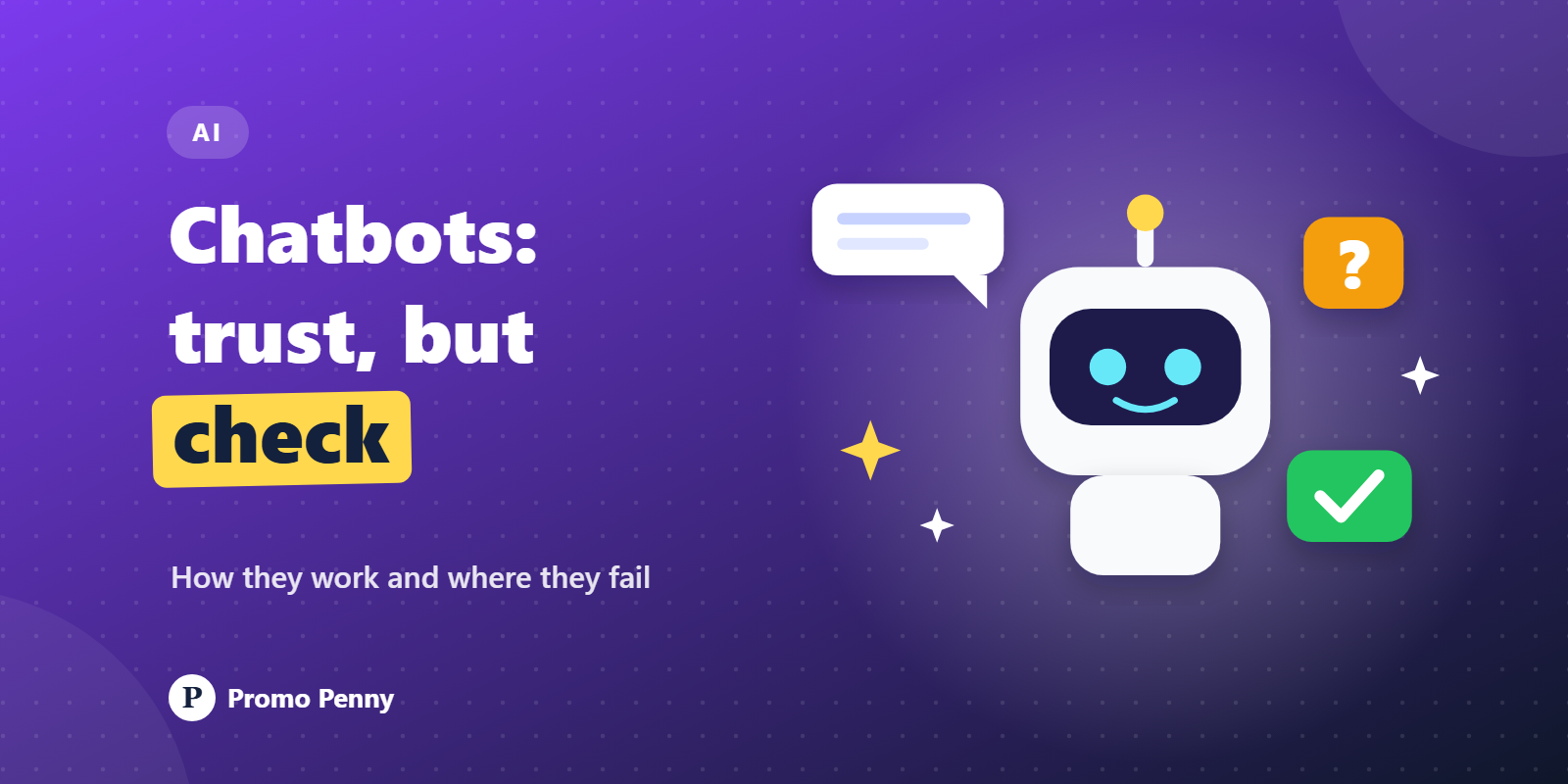
An AI chatbot is, at its core, a very sophisticated text predictor. You type something, and it works out, one small piece at a time, what text is most likely to come next.
That sounds far too simple to explain how it can write a leave application, explain compound interest or fix your code. But once you understand the prediction part, a lot of its odd behaviour, the impressive and the embarrassing, starts to make sense.
The technology behind most chatbots is called a large language model, or LLM. Here's the idea in plain terms.
Training. The model is shown an enormous amount of text: books, websites, articles, code and more. Its task during training is repetitive. Read some text, guess the next piece, check the guess, adjust slightly. Repeat this an almost unimaginable number of times. The pieces are called tokens, which are often whole words or parts of words.
Through this, the model picks up patterns. Grammar, yes, but also which facts tend to appear together, how a formal letter is laid out, how explanations usually flow and what working code looks like. It isn't storing the text like a library stores books. It's squeezing patterns into a huge set of numbers.
Tuning. A raw model that only continues text isn't a helpful assistant yet. Developers train it further on examples of good answers and on human feedback about which responses are better, so it learns to follow instructions, answer questions and decline certain requests.
Answering you. When you ask something, the model takes your message, plus the conversation so far, and generates a reply token by token, each choice shaped by the patterns it learned. There's usually a bit of deliberate randomness, which is why the same question asked twice can come back worded differently.
This is the most common misunderstanding. A basic chatbot isn't searching the internet or checking a database when it answers. It's generating text from what it absorbed in training.
That has two consequences:
Some chatbots can now be connected to web search, your documents or other tools. Then the chatbot fetches material and writes an answer based on it. That helps a lot with current information, but the model can still misread or misstate what it found, so the sources it shows are worth opening.
When a chatbot states something false as if it were true, people call it a 'hallucination'. It isn't lying in the human sense. It's doing exactly what it was built to do: producing text that sounds right.
Here's a simple way to see it. Ask for the birth date of a very famous person and the pattern in its training is strong, so it's usually correct. Ask about a small-town doctor or an obscure court case and the pattern is weak. The model still produces a fluent, specific answer, because fluent and specific is what good text looks like. It may invent a date, a quote, a book title or a court judgment that never existed.
The tone doesn't change between the two cases. That's the dangerous part. A chatbot's confidence tells you nothing about its accuracy.
Errors are more likely with:
Arithmetic deserves a special mention. Because the model predicts text rather than calculating, it can get a multi-step sum wrong while showing neat, confident working. Some tools now pass calculations to a built-in calculator or code, which helps, but check any figure that matters.
None of this makes them useless. Given the right jobs, they save real time.
Notice the pattern: they're strongest where you can easily judge the output yourself.
Treat any specific fact, figure, date or citation as a lead to verify, not a final answer. For anything official, such as tax rules, exam dates or government schemes, go to the official source.
A chatbot can help you understand a term in a lab report or prepare questions for your doctor, lawyer or financial adviser. It shouldn't replace them. It doesn't know your full situation, can be wrong without warning and isn't accountable. In an emergency, call 112 or 108, not a chatbot.
Assume that what you type may be stored, reviewed or used to improve the service, depending on the provider's policy and your settings. Don't paste Aadhaar or PAN numbers, passwords, bank details, medical reports with your name on them or confidential work files unless you know your organisation allows it. Strip out names and identifying details when you can.
For students especially, letting the chatbot write everything skips the learning. Use it to explain and to check your work, not to do your thinking.
The simplest mental model: a fast, well-read assistant that is brilliant with language and unreliable on facts. Hand it the drafting, the explaining and the first pass. Keep the checking and the deciding for yourself.




















© 2026 Promo Penny. All rights reserved
Designed & Developed by IngeniousPro Team.